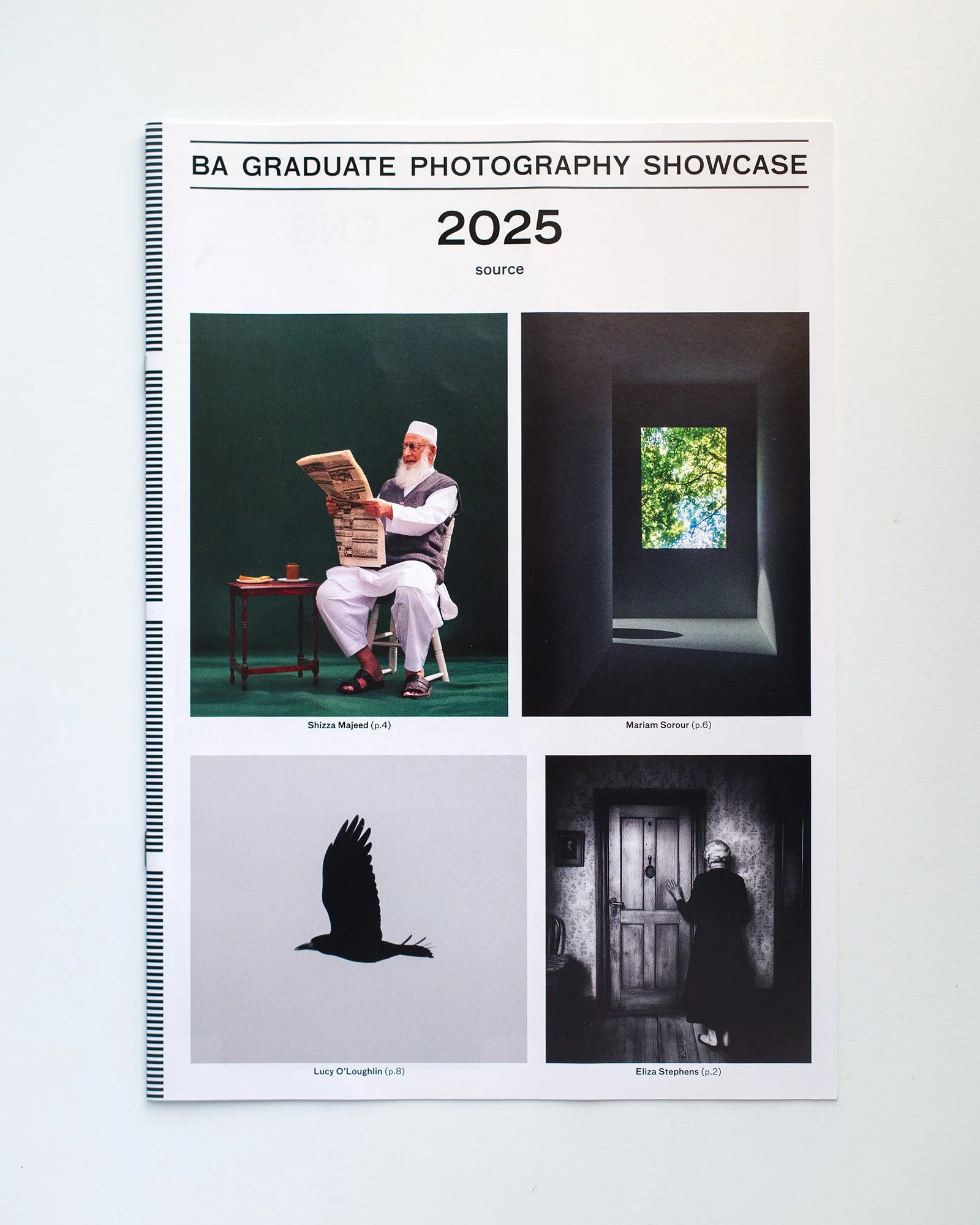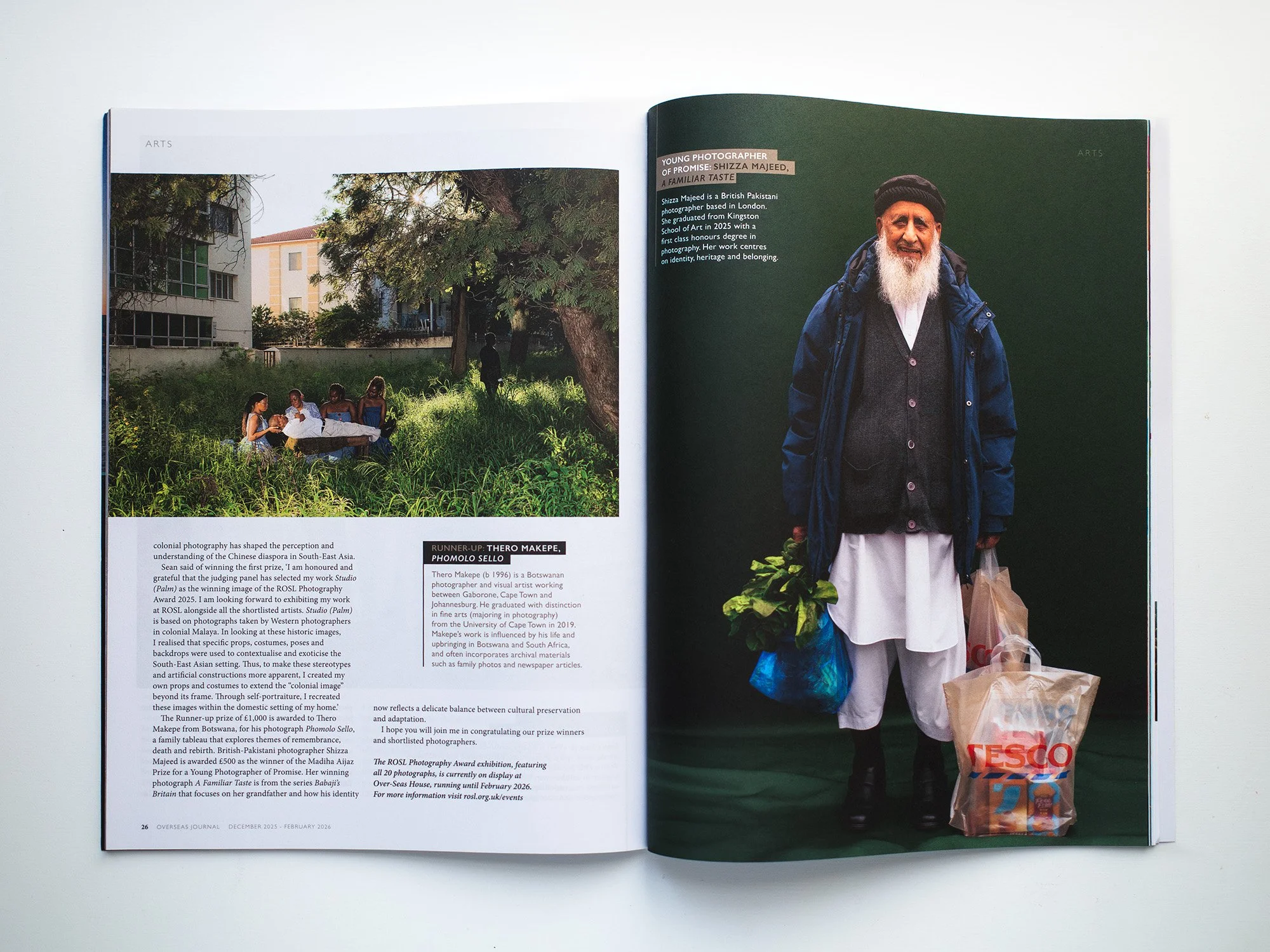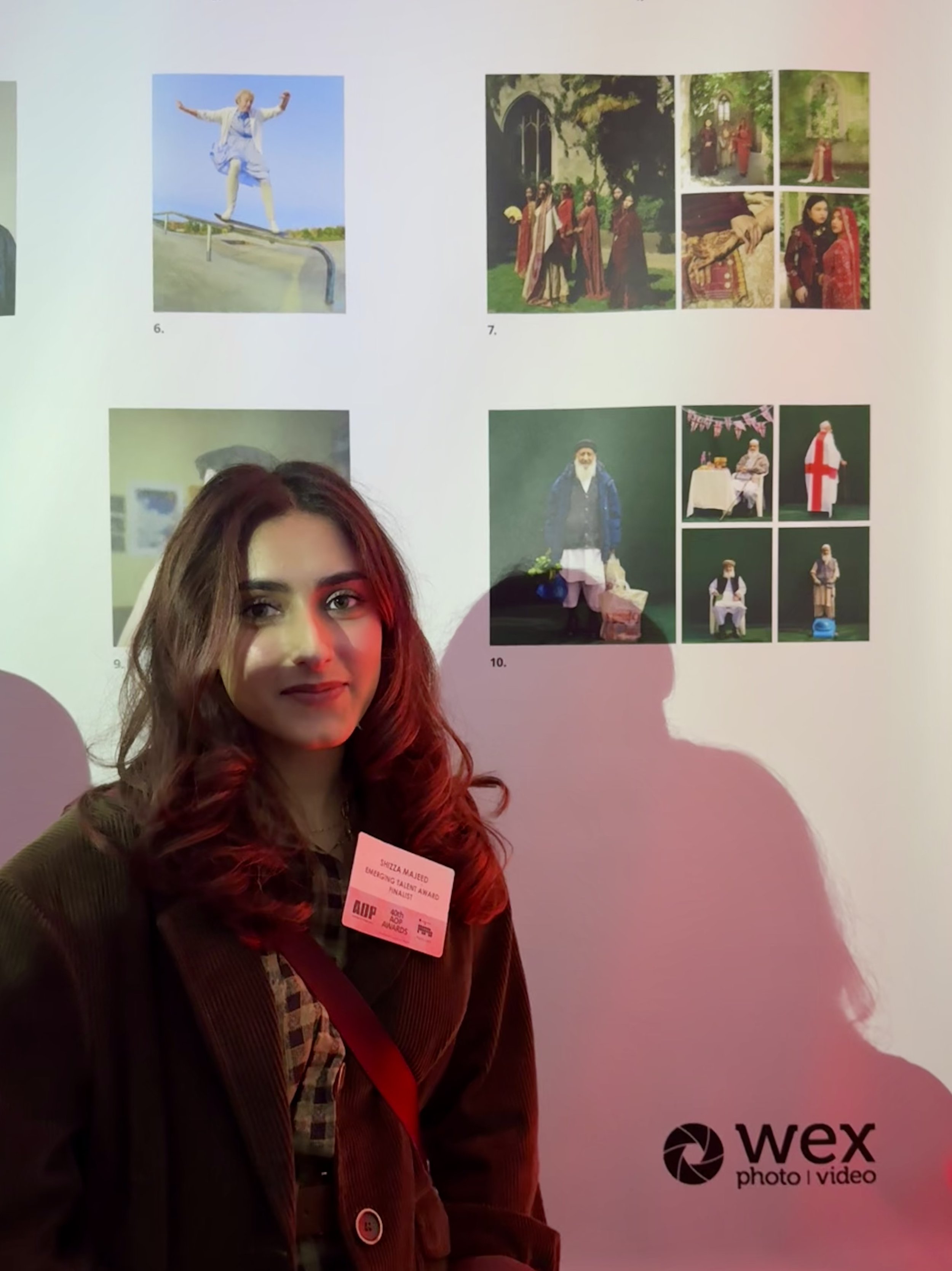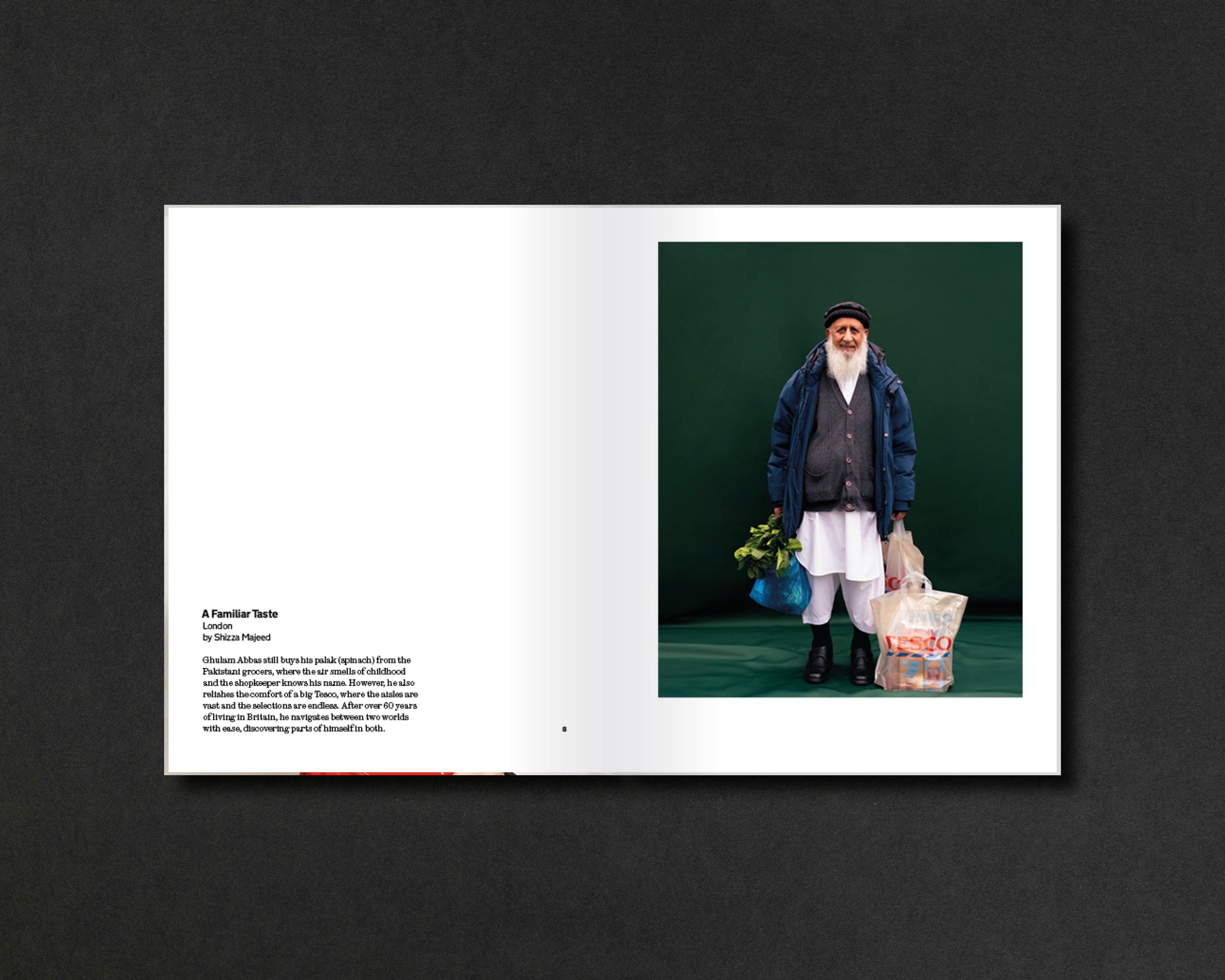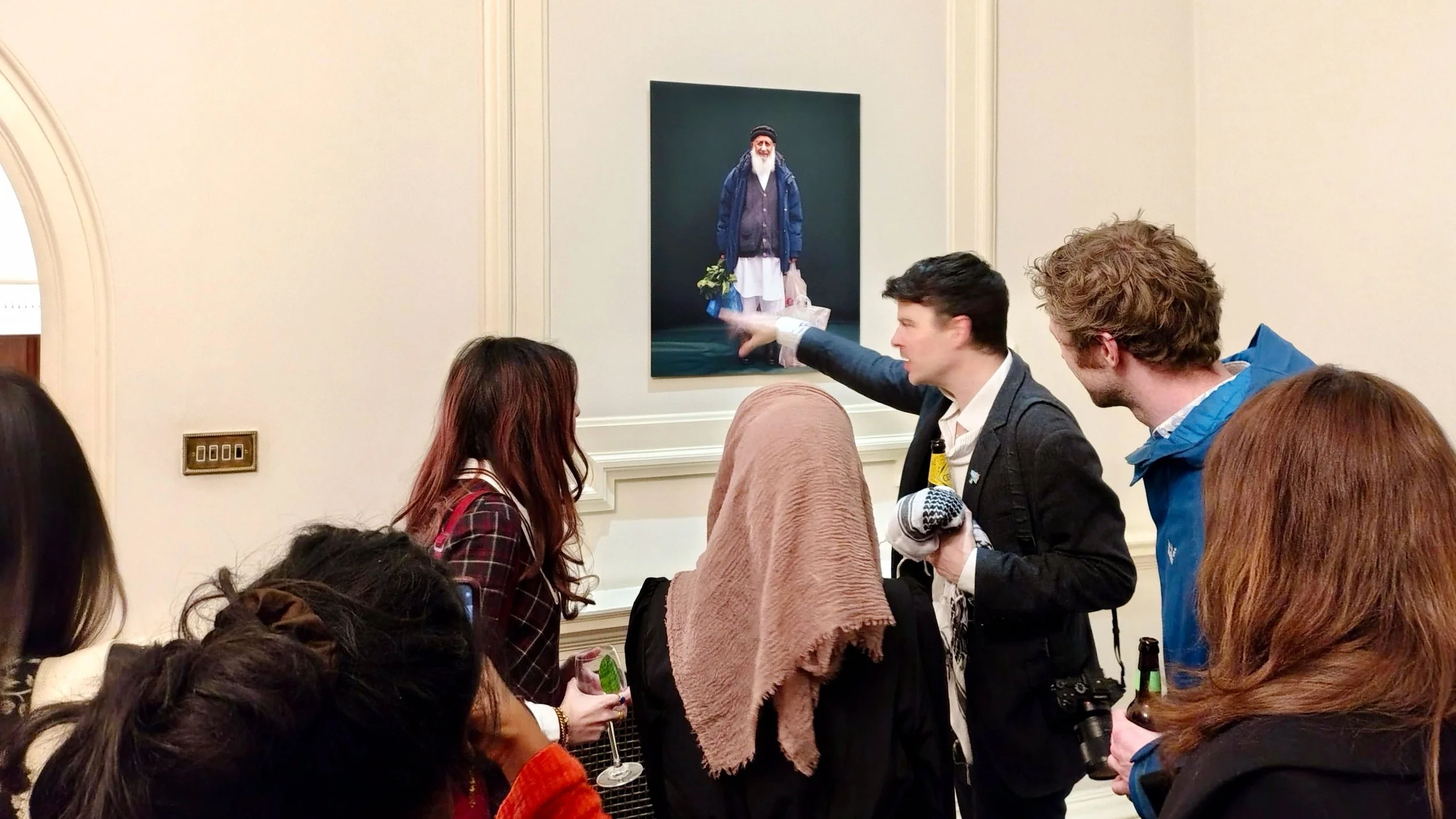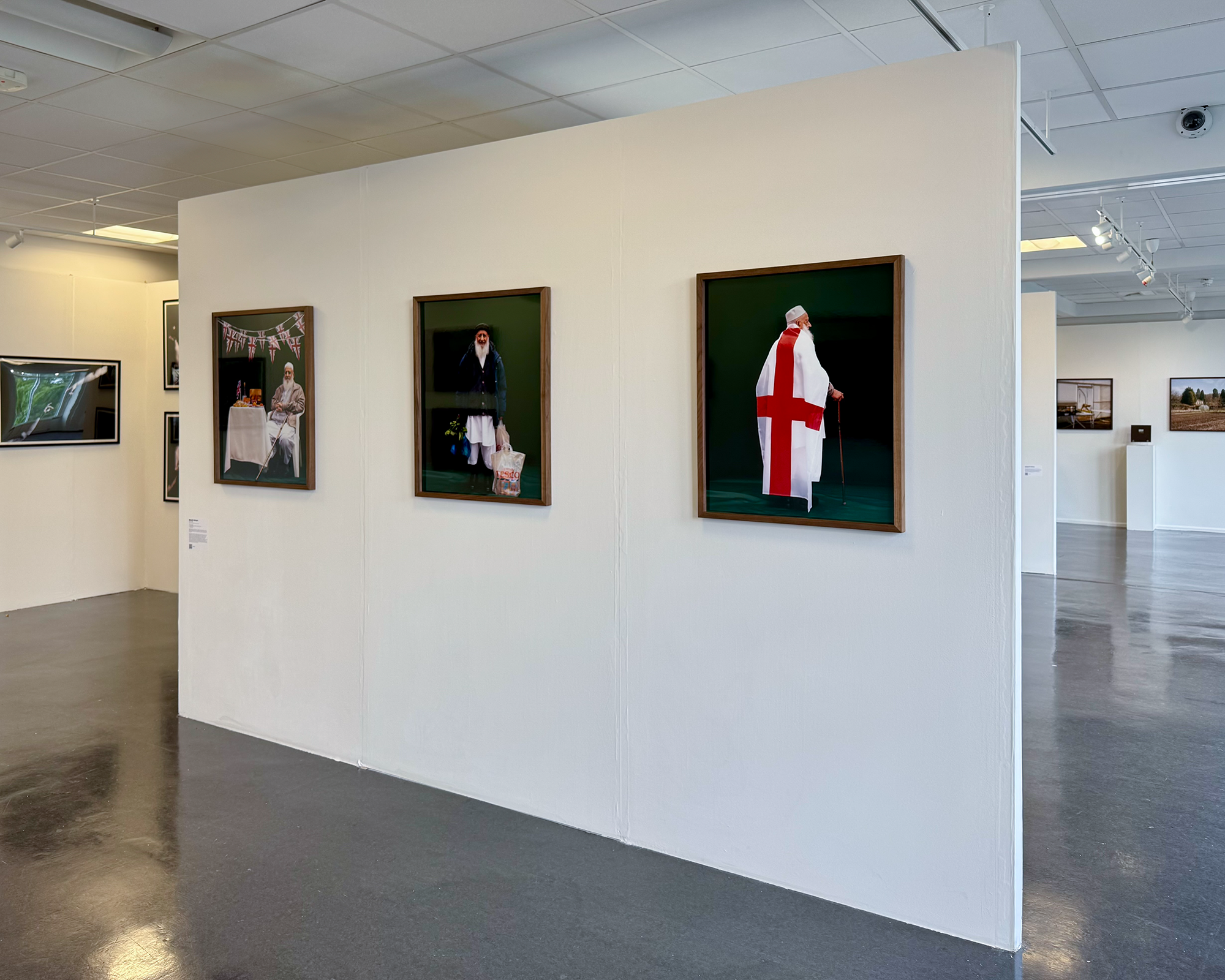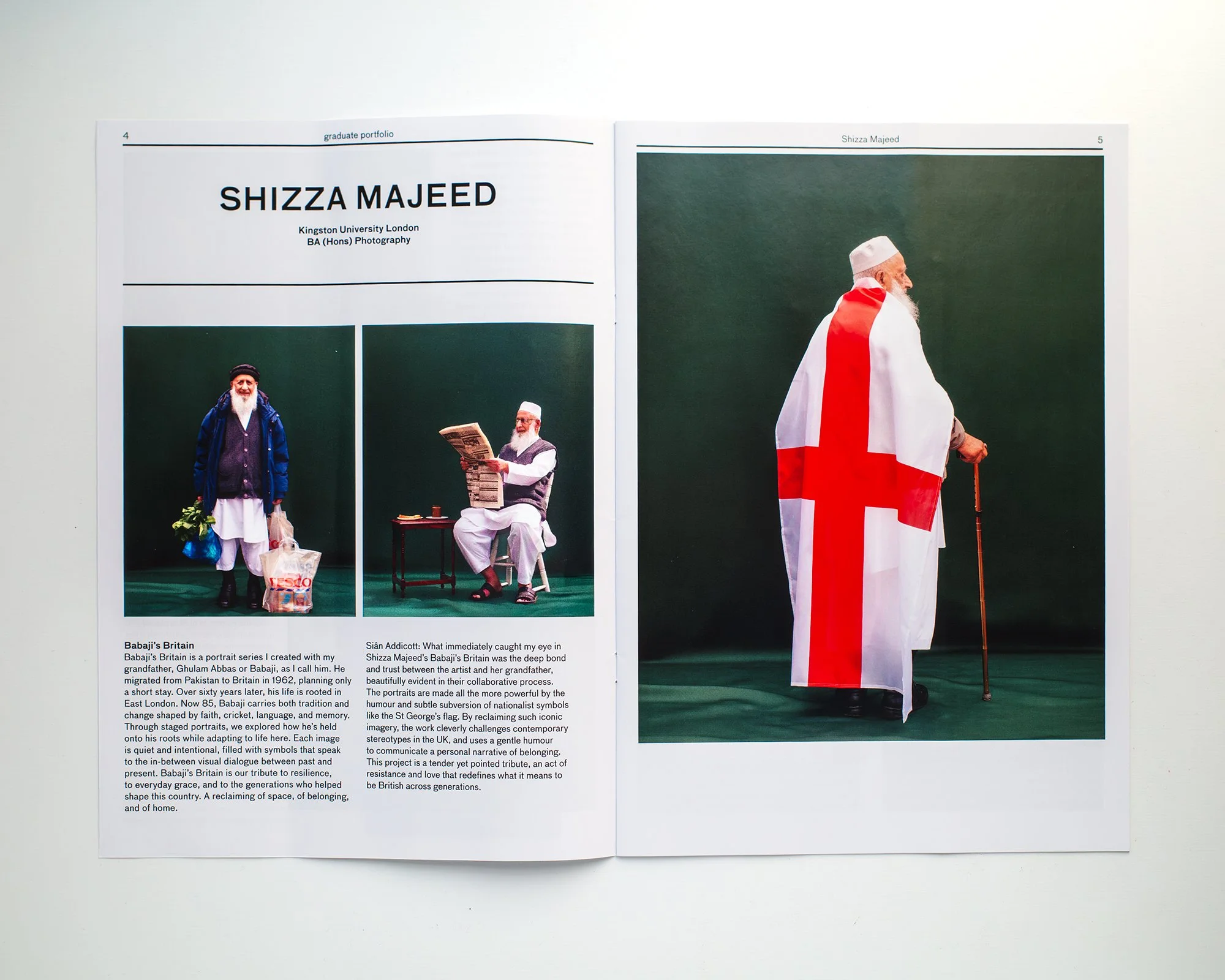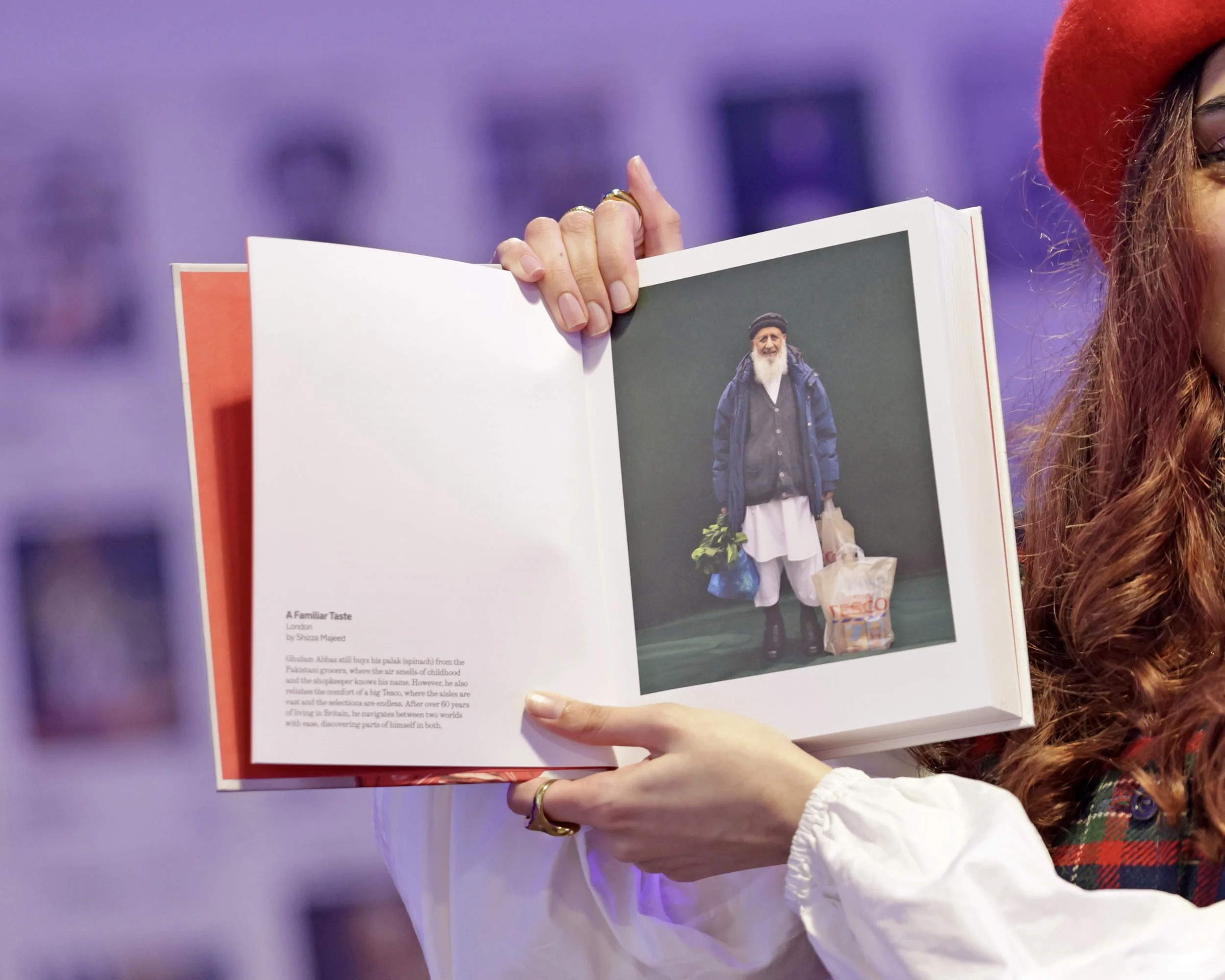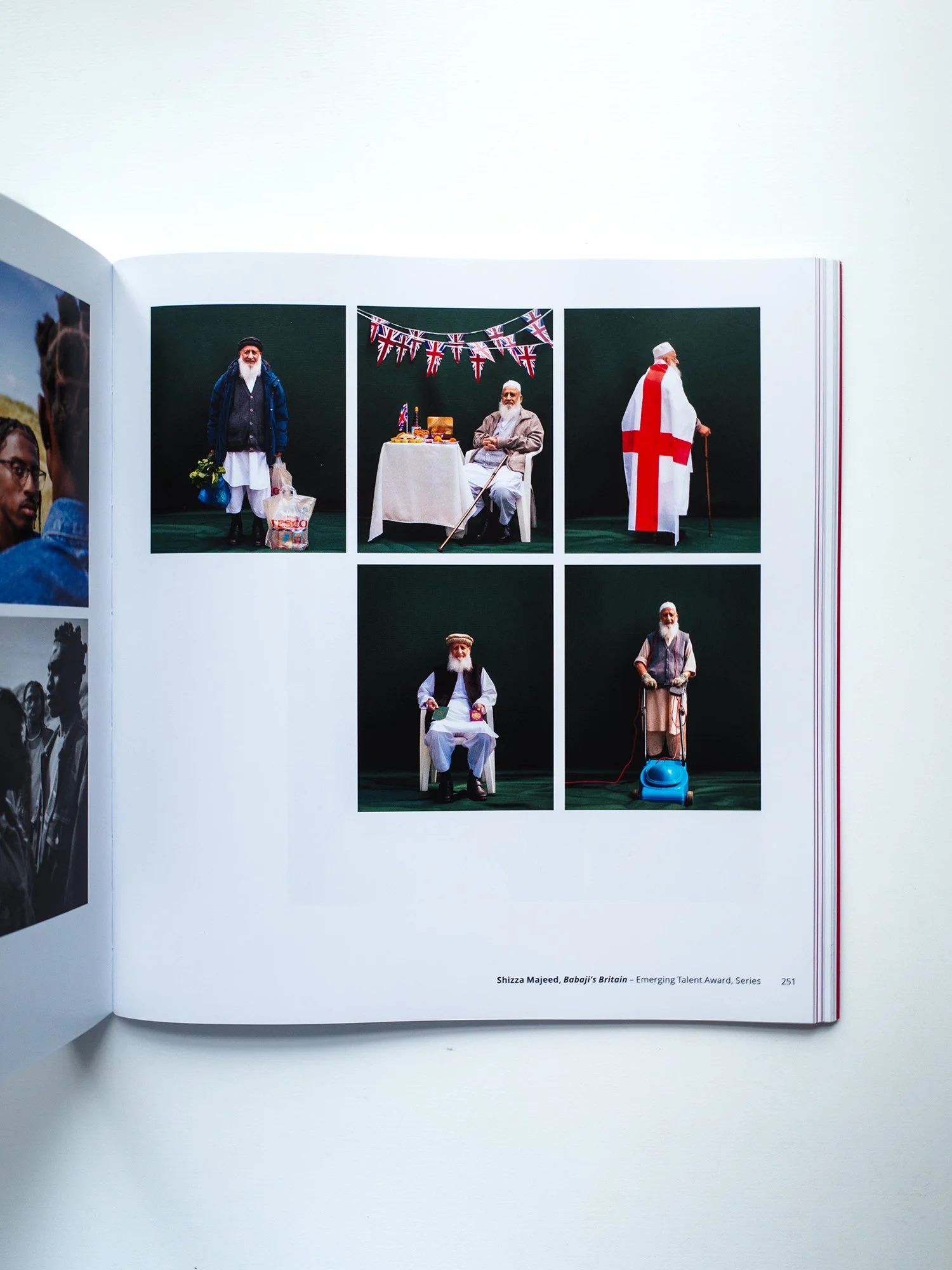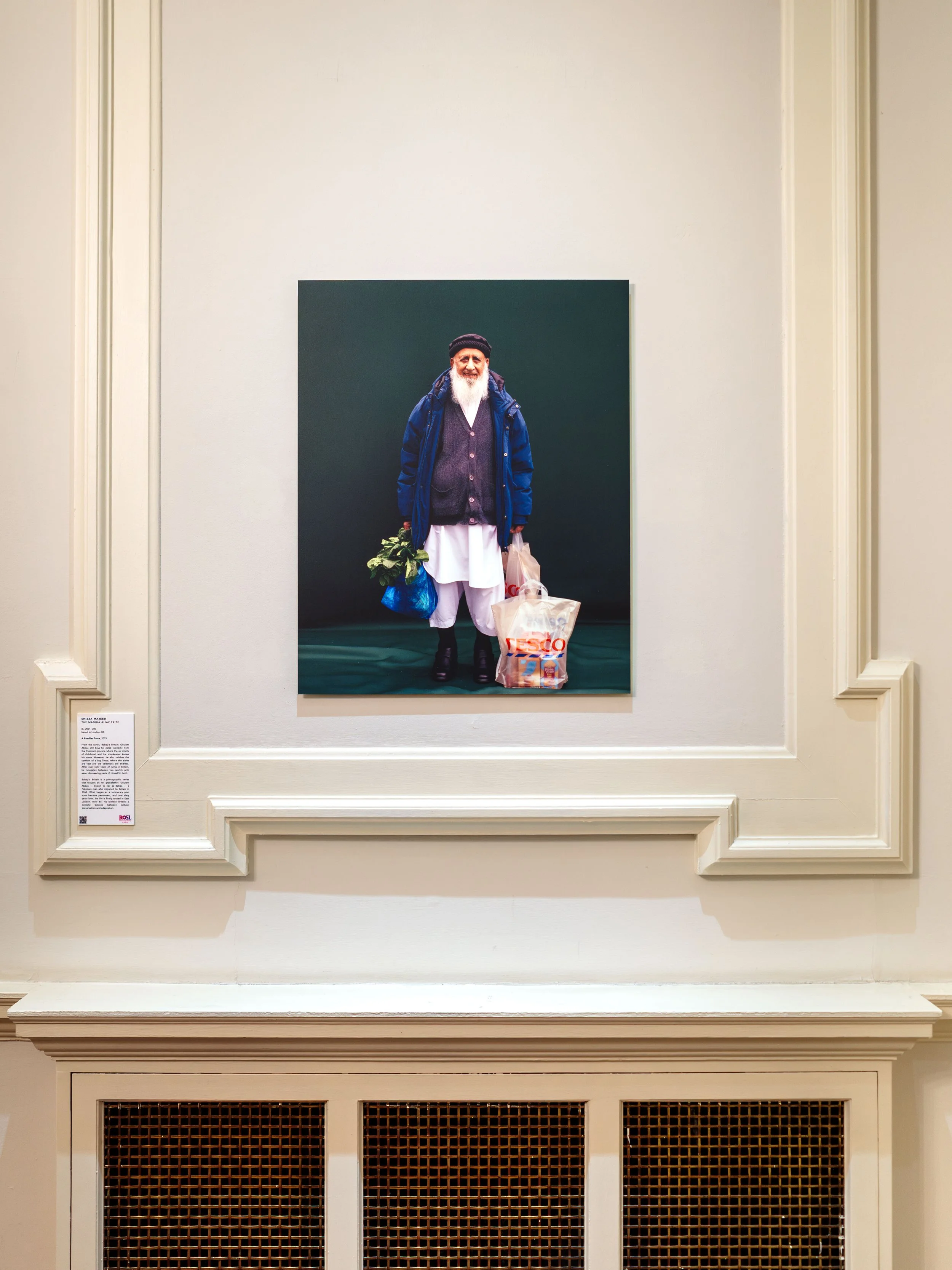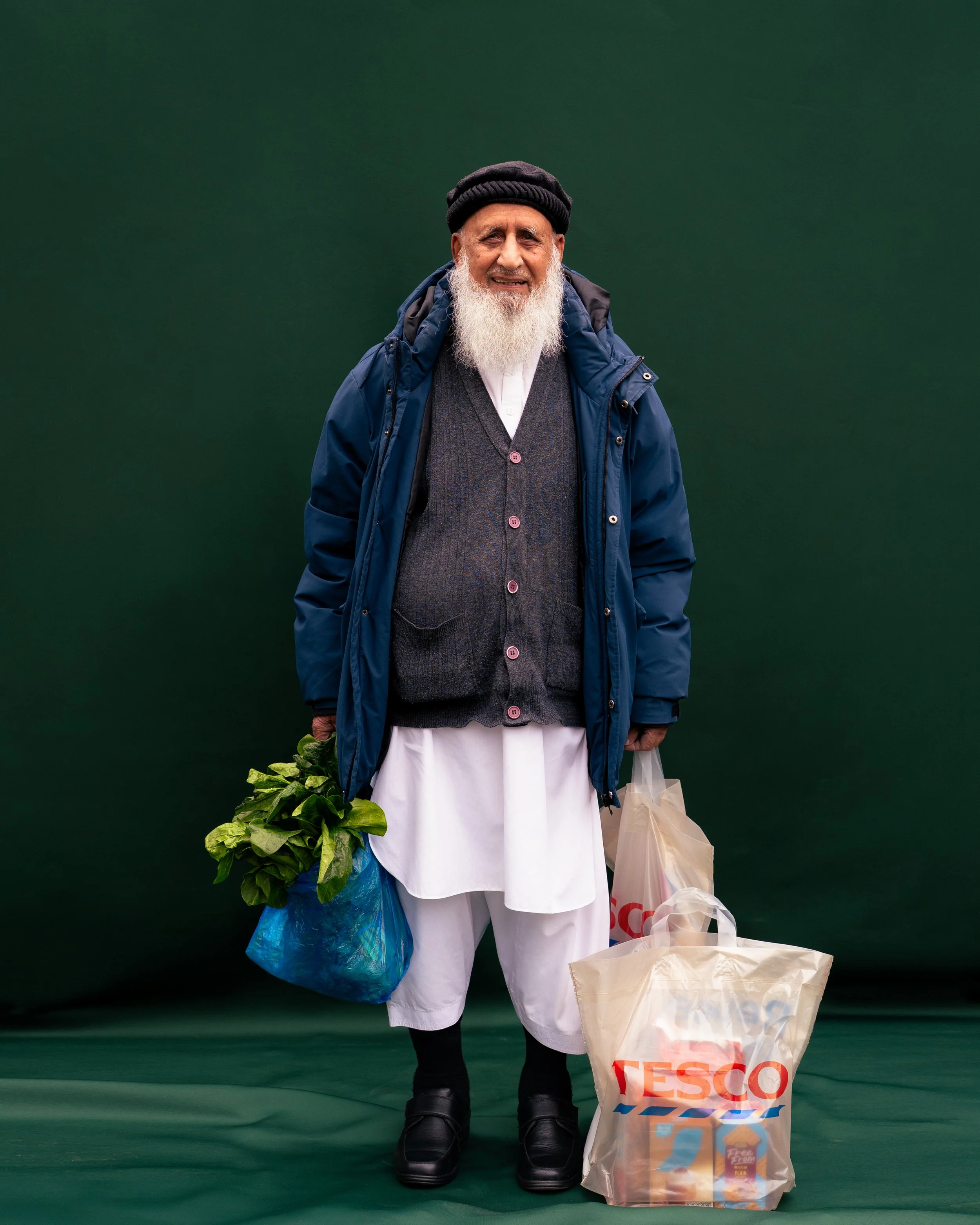
A Familiar Taste

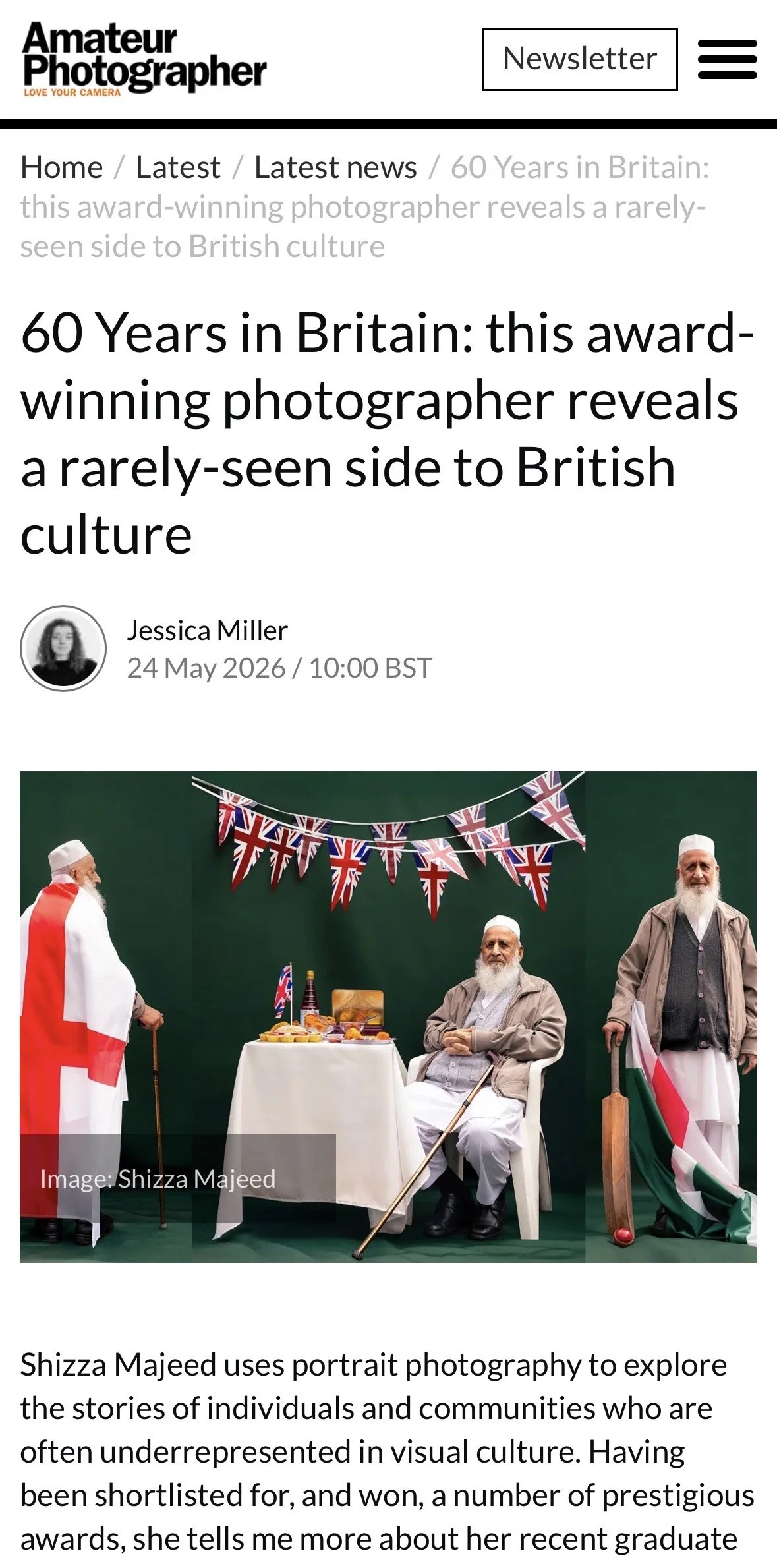
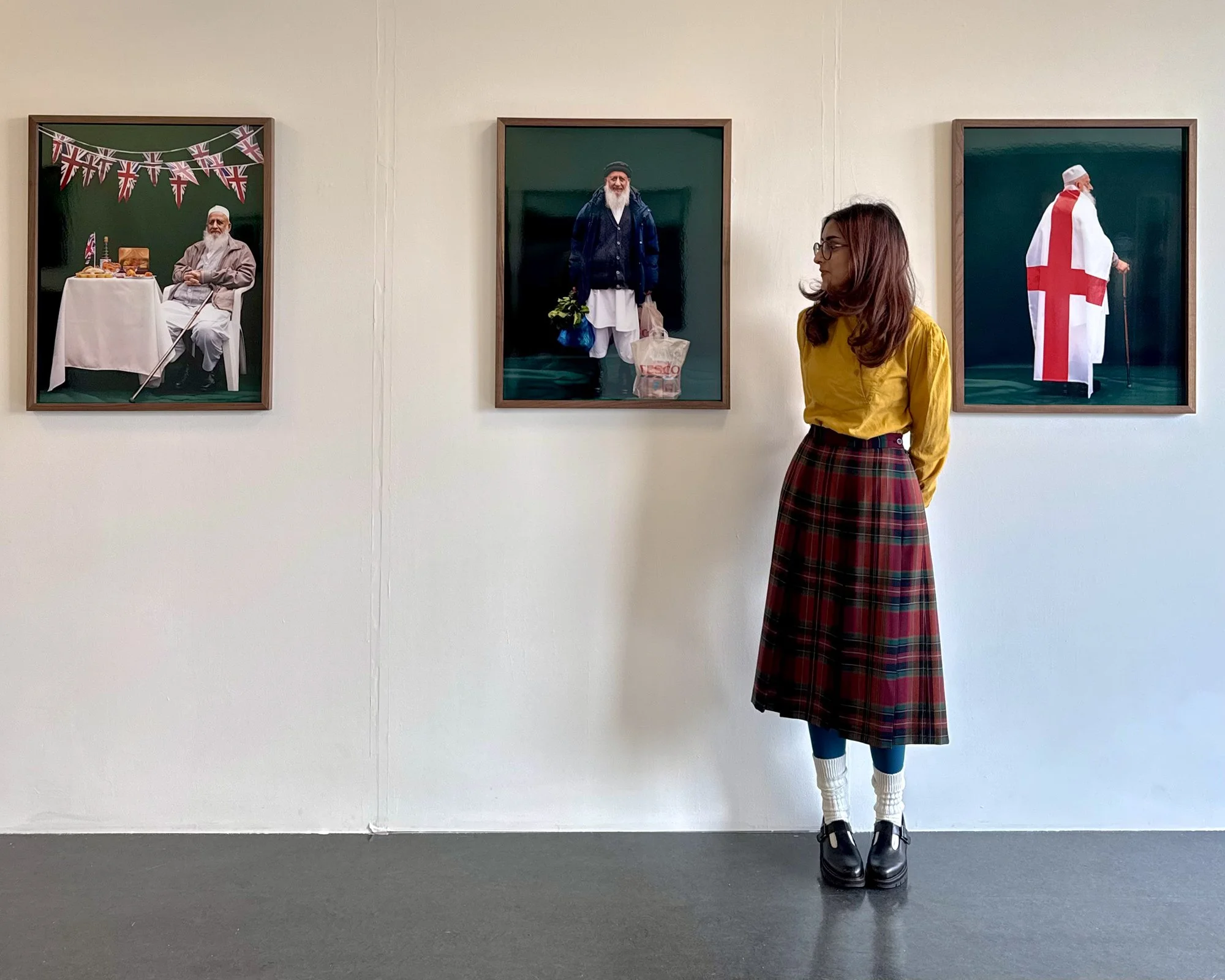
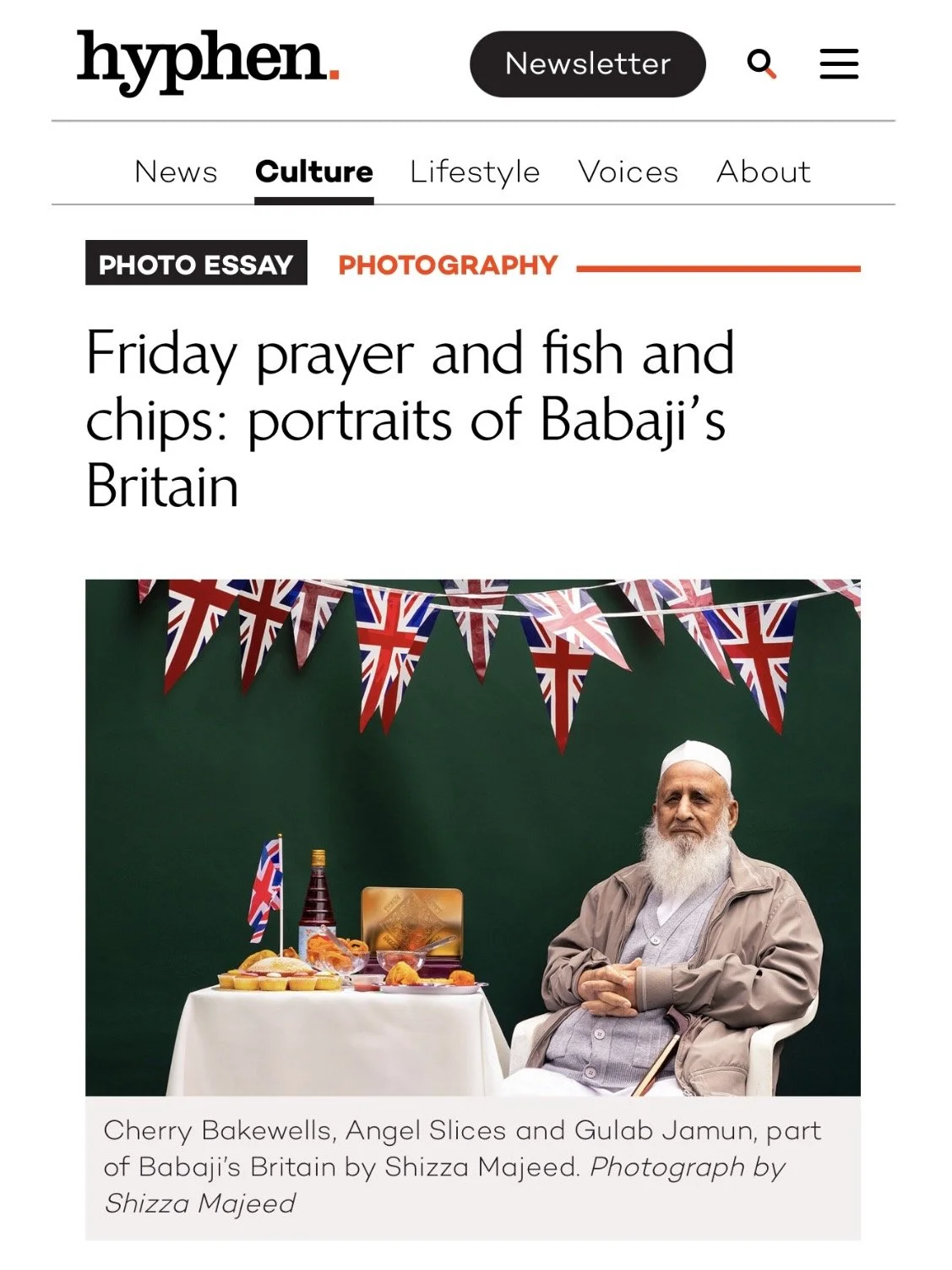
Cherry Bakewell's, Angel Slices and Gulab Jamun
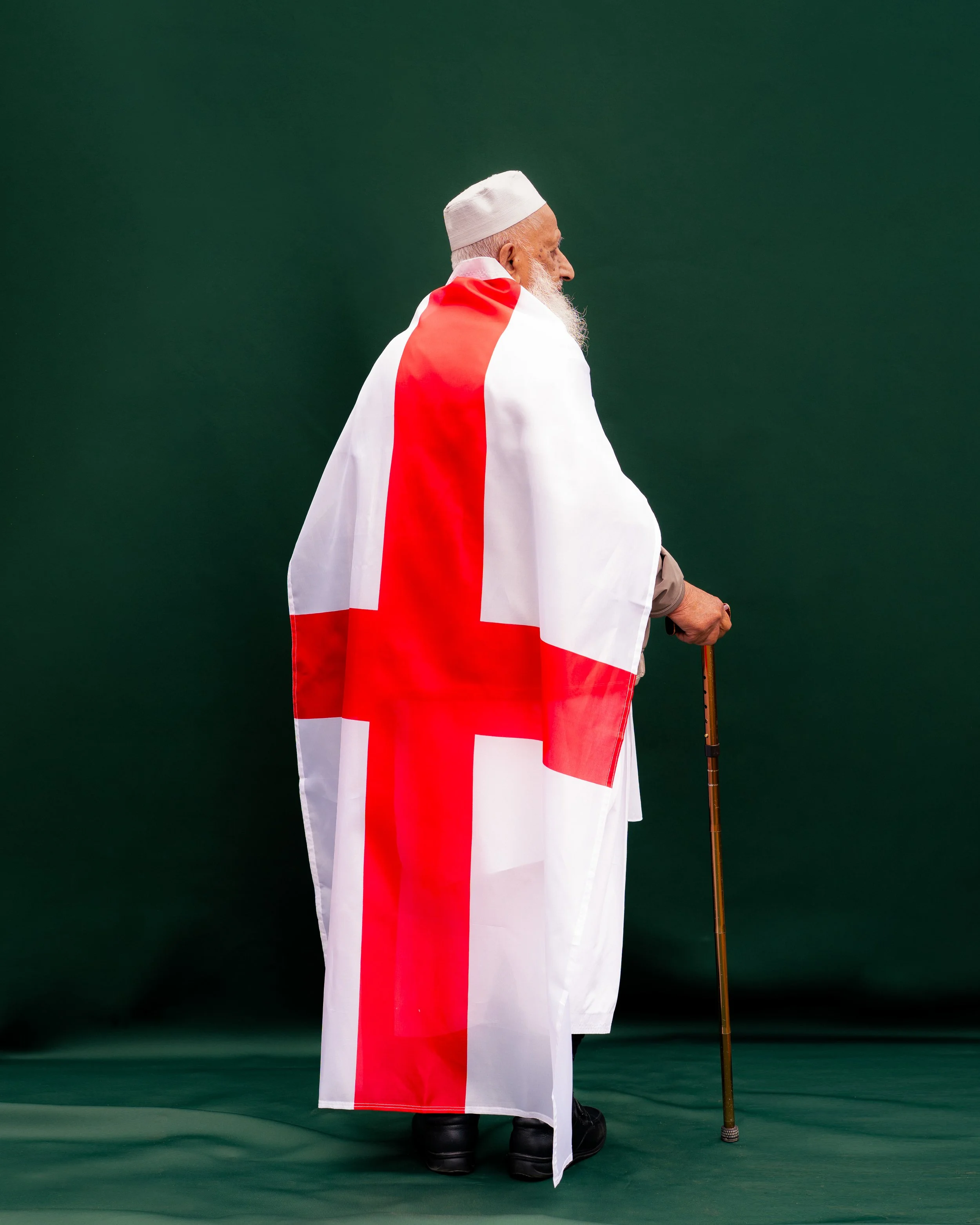
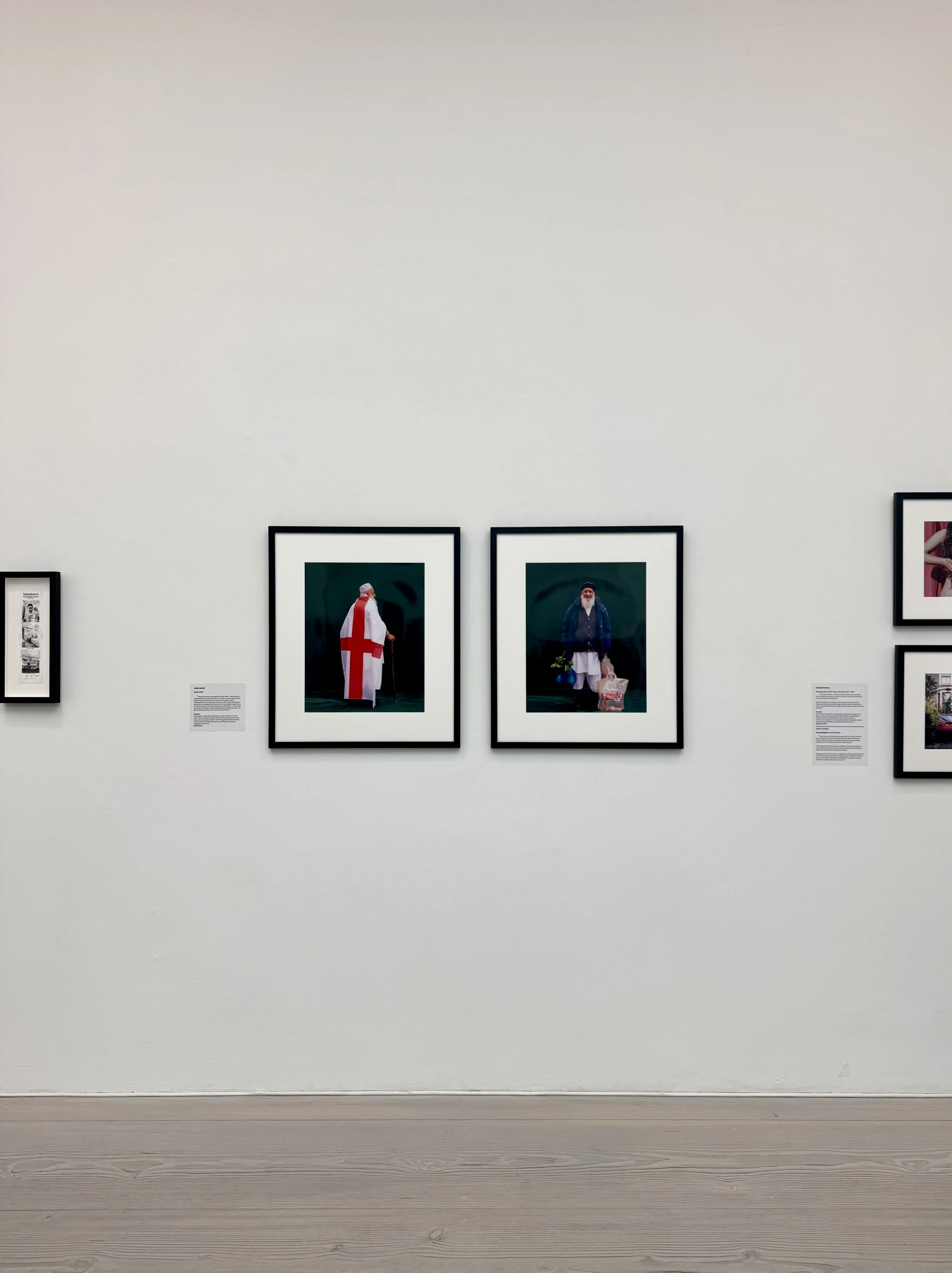
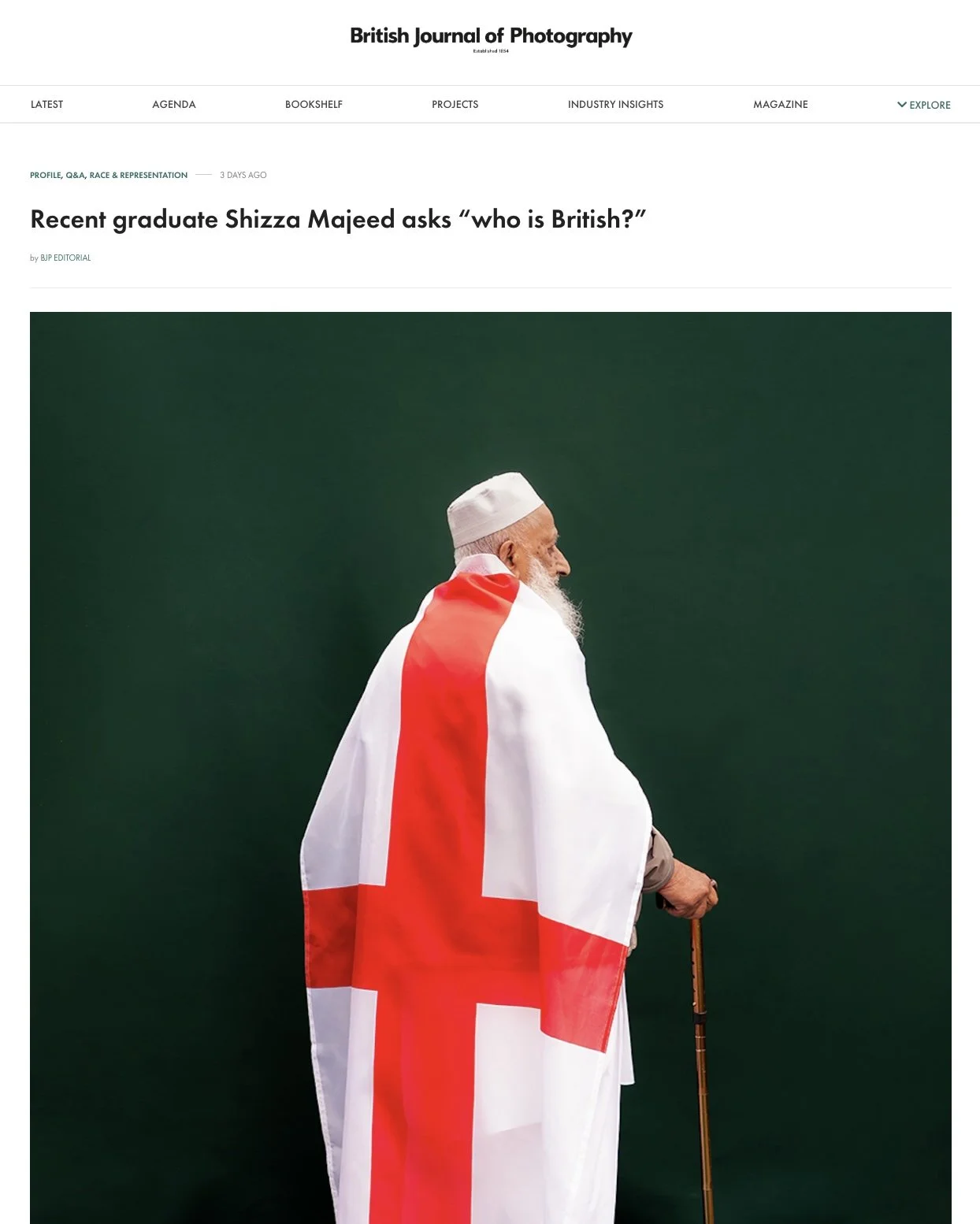
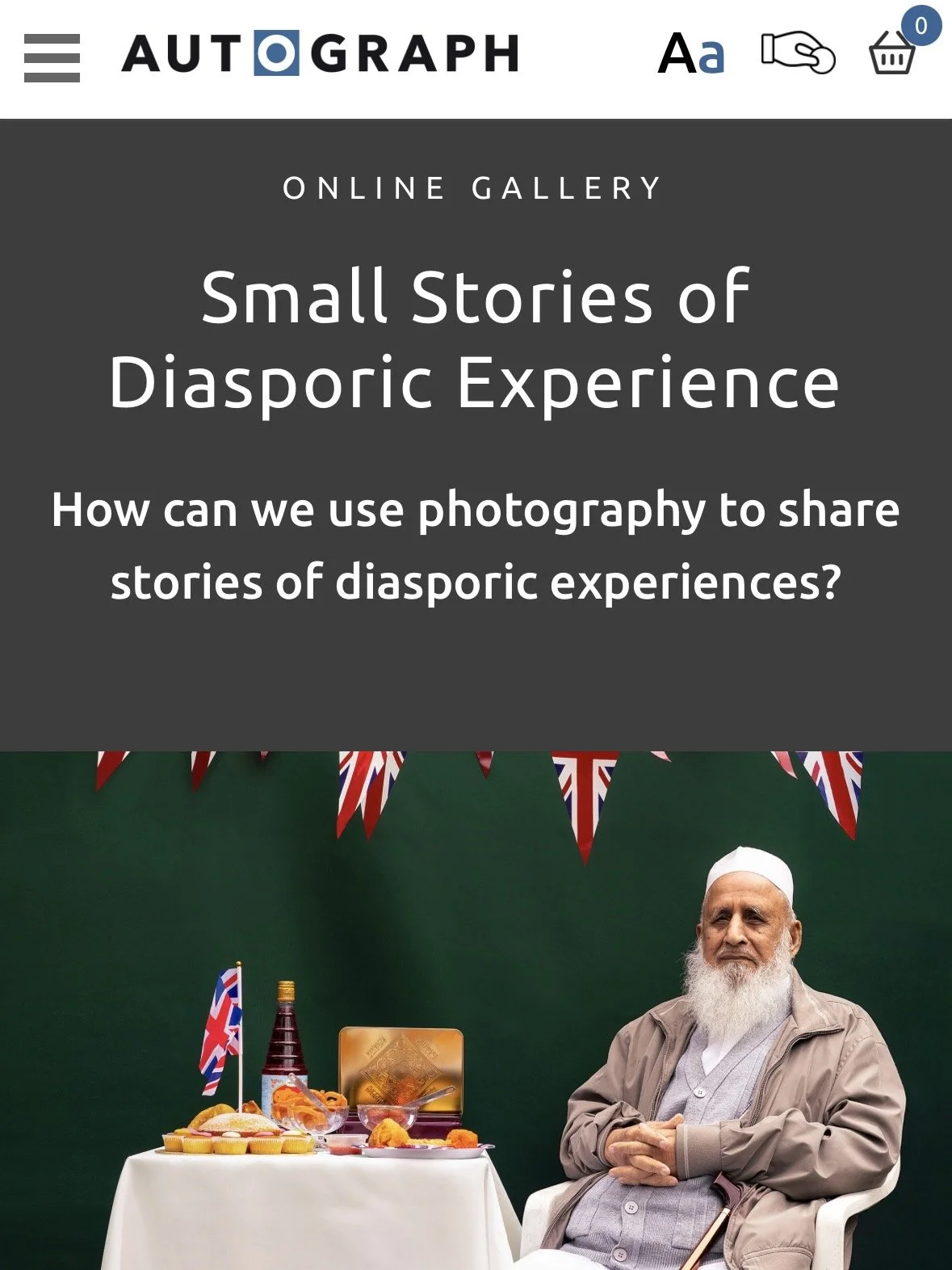
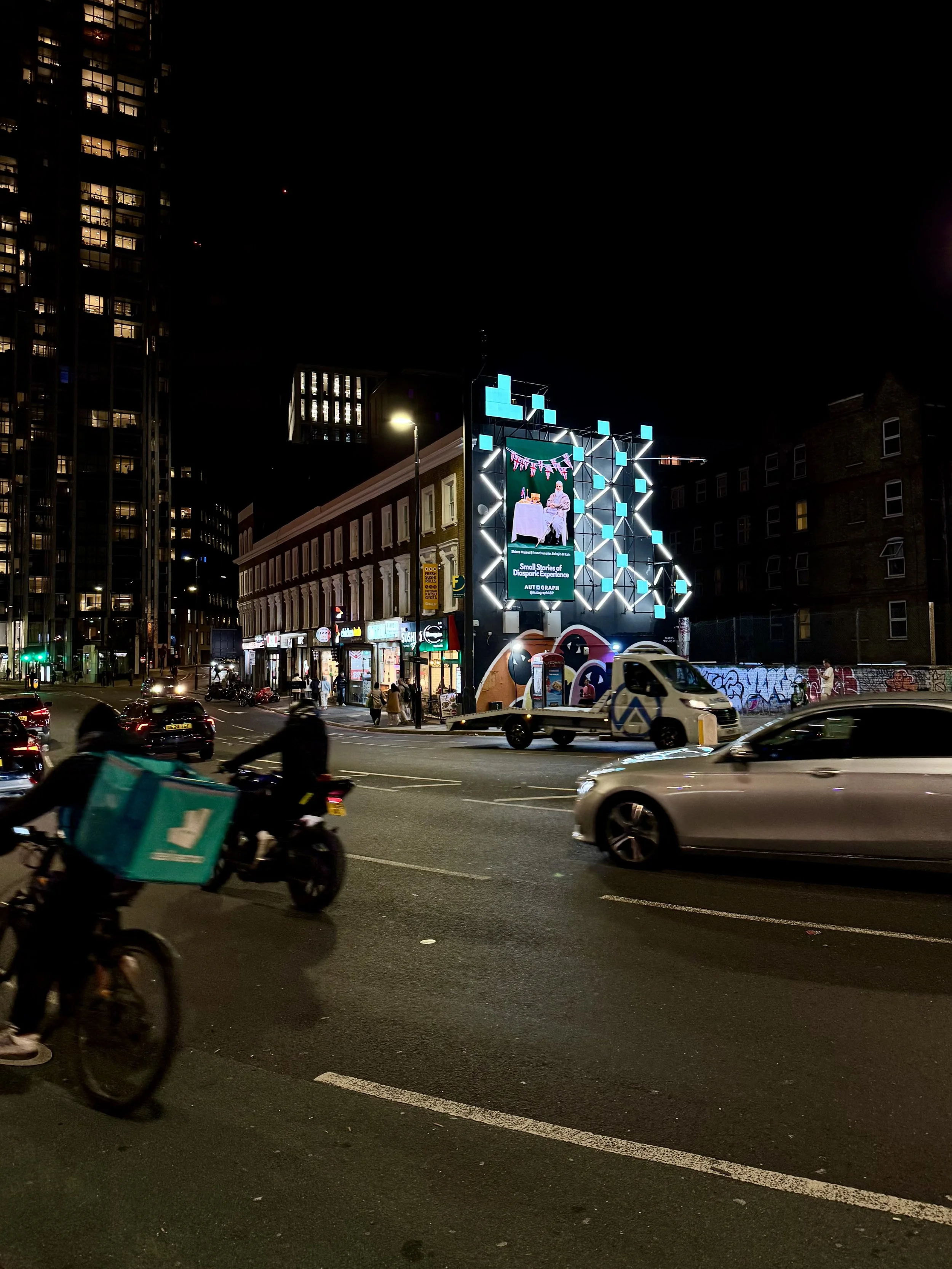
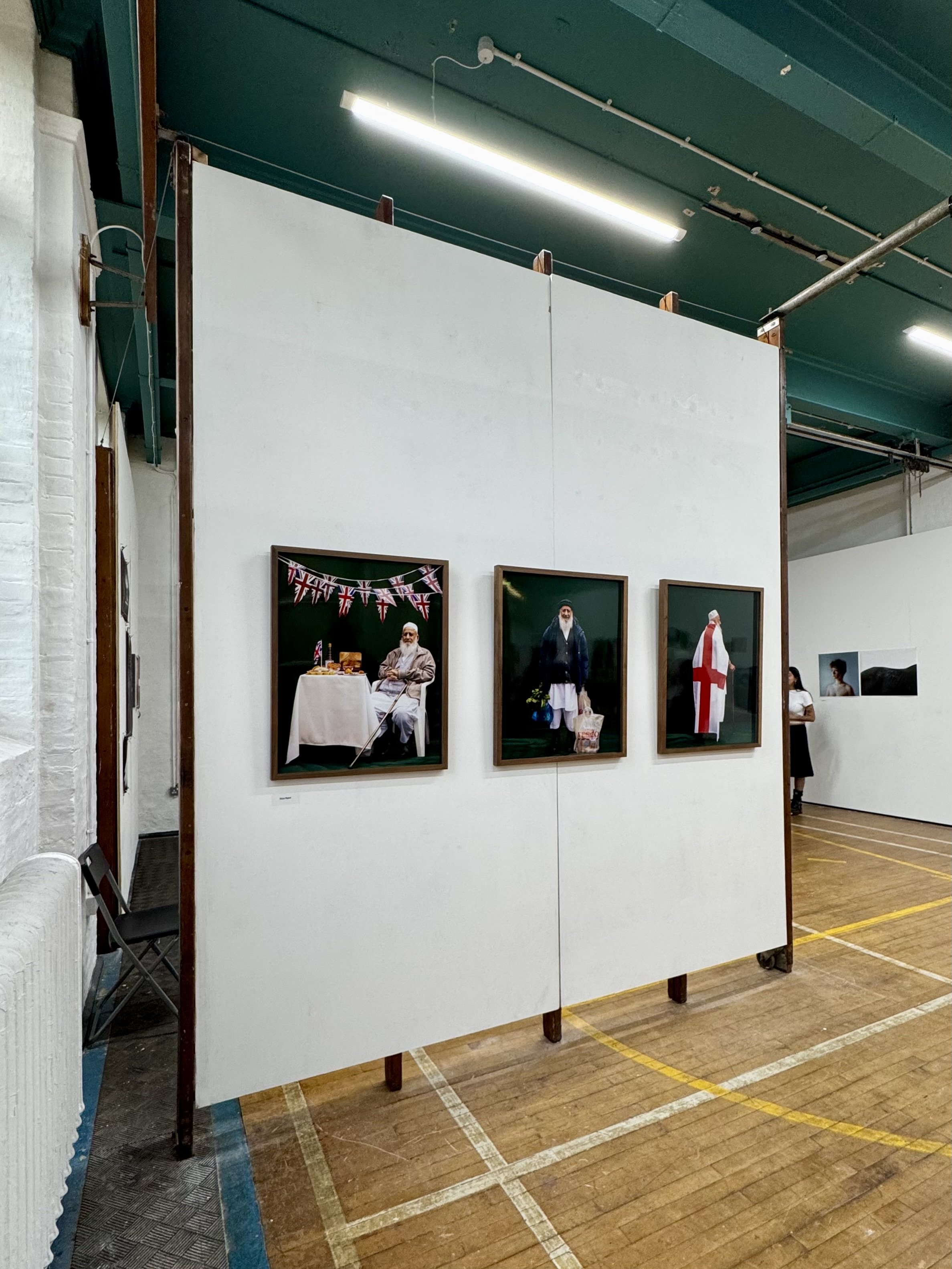
The Three Lions
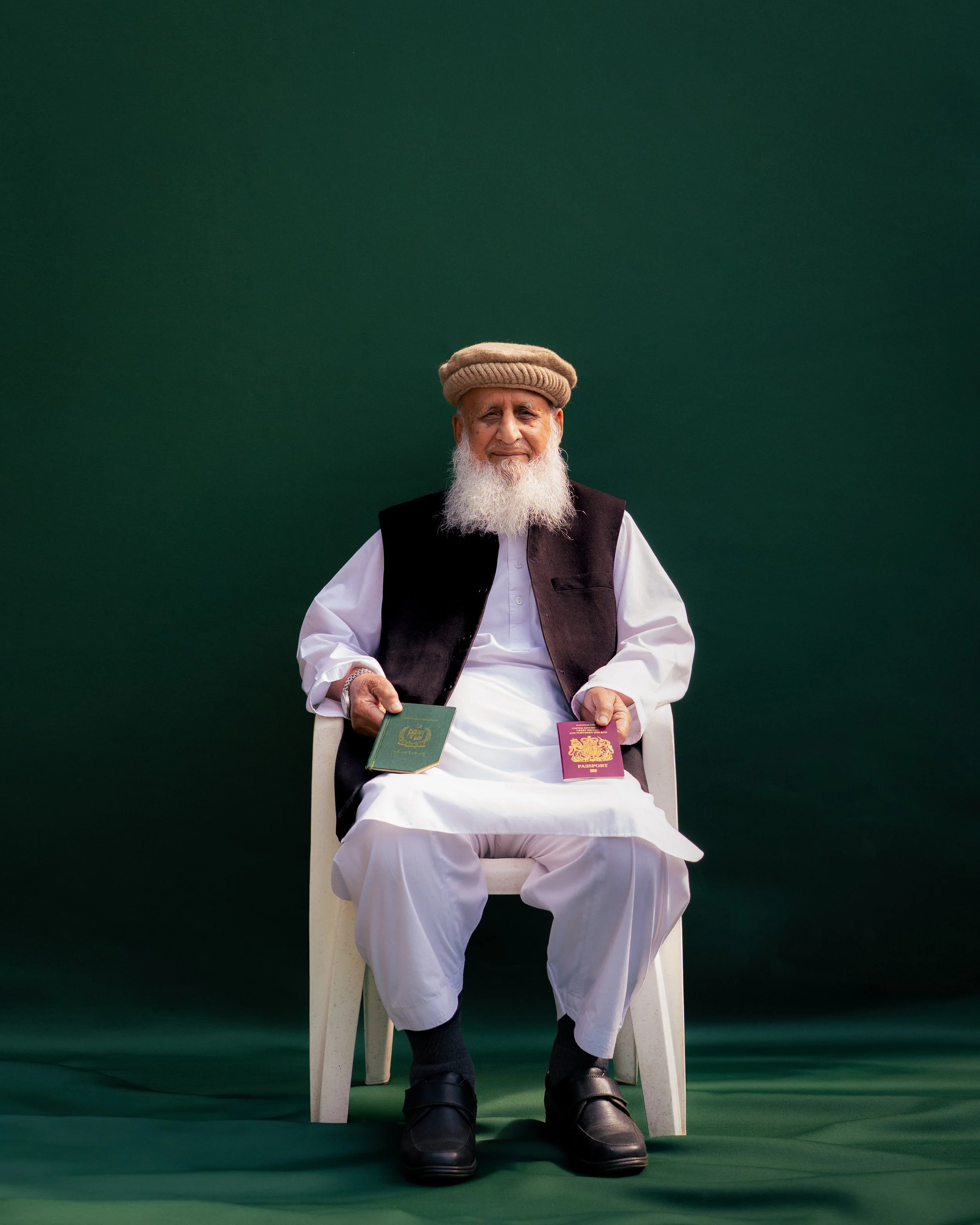
From Ballo to Britain
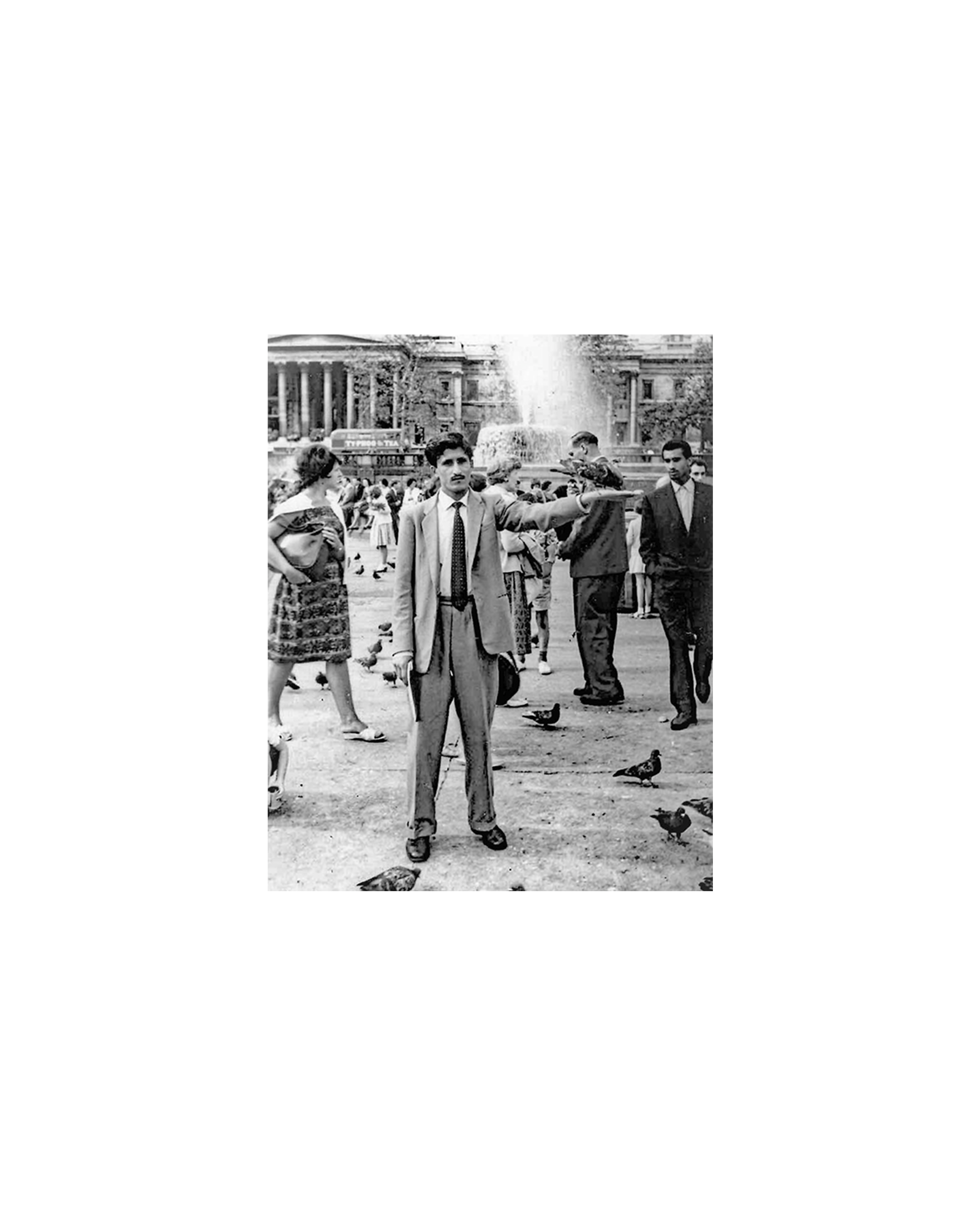
Trafalgar Square, London, 1962

Fish and Chips After Jummah
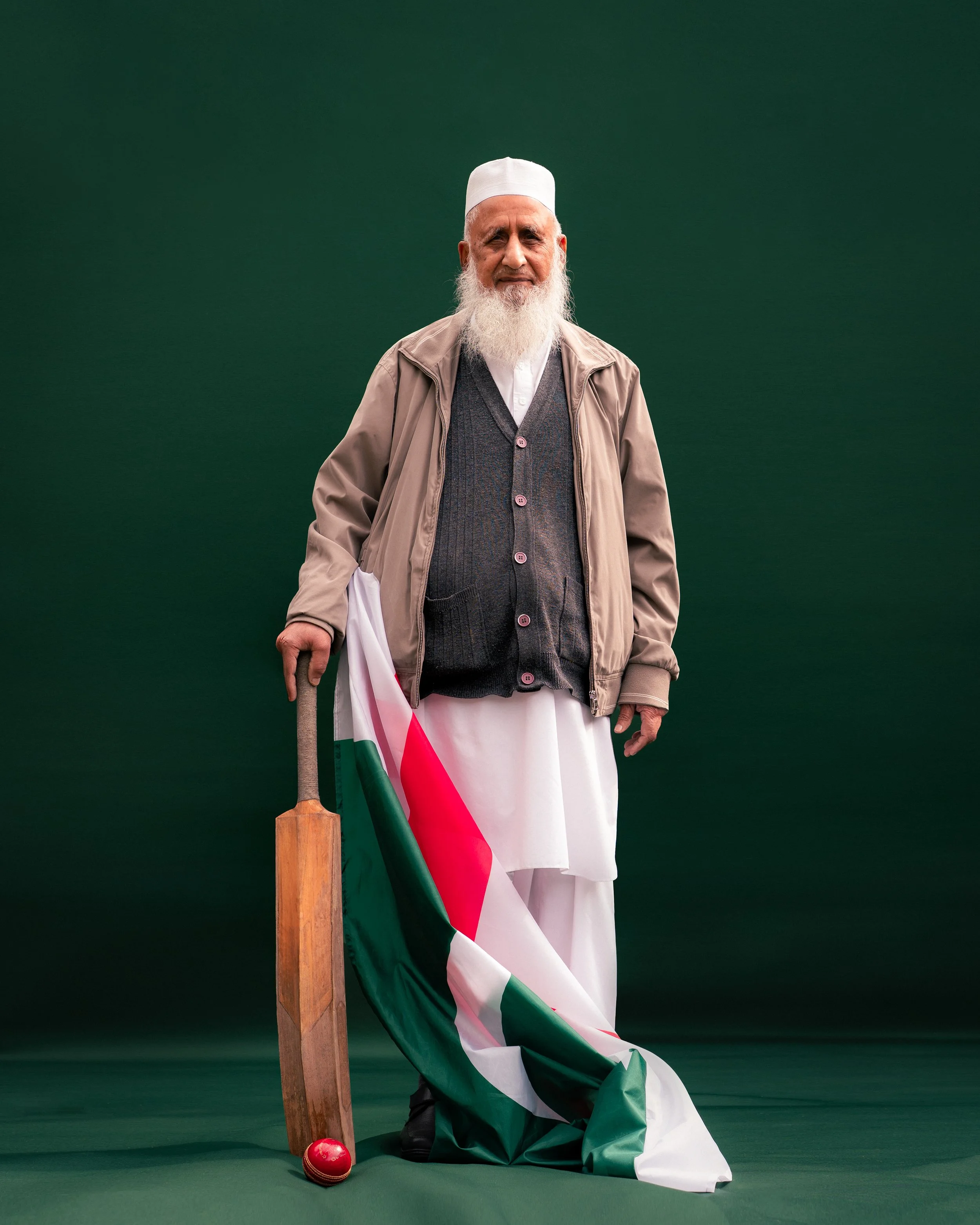
England vs Pakistan

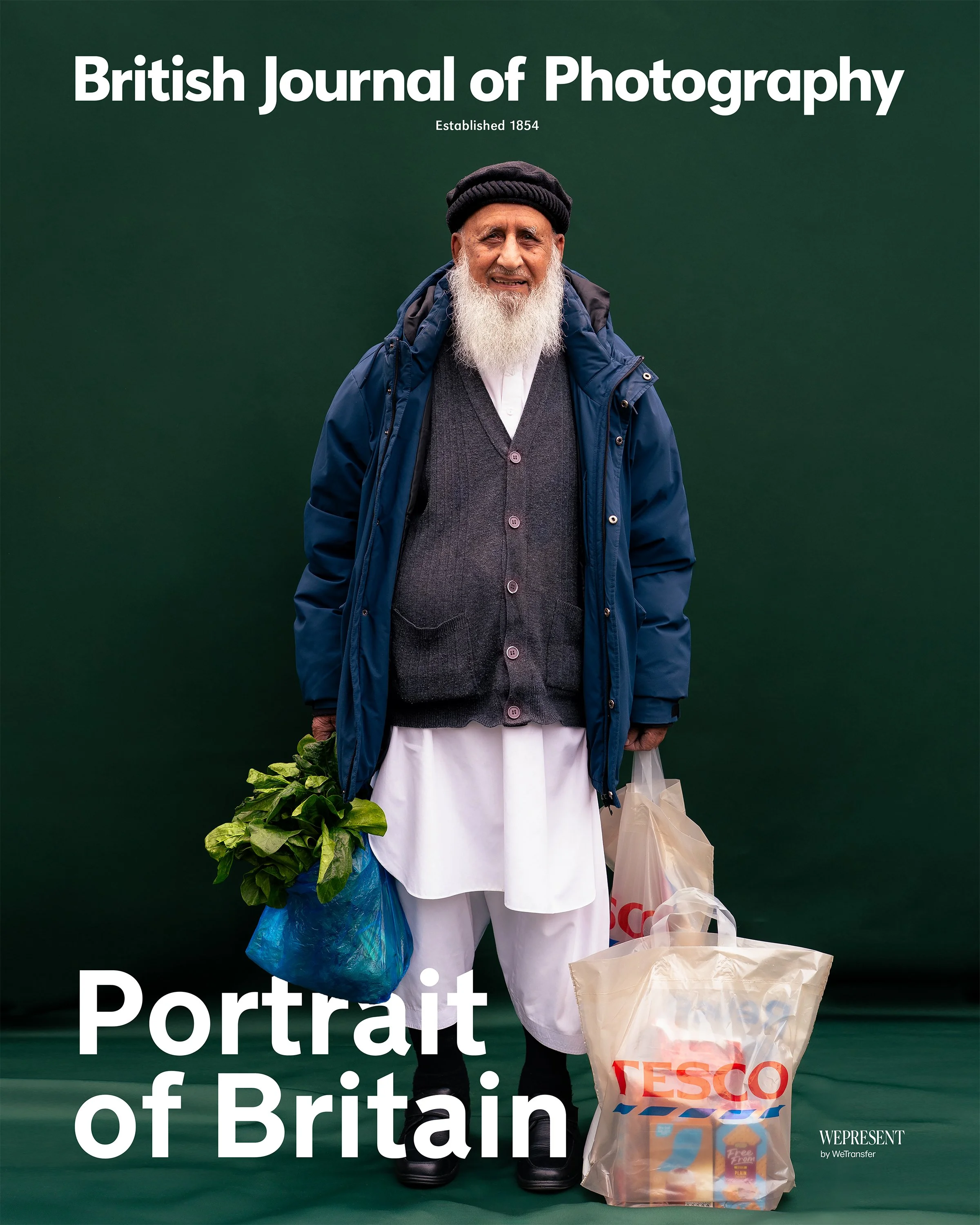
Brown Thumbs
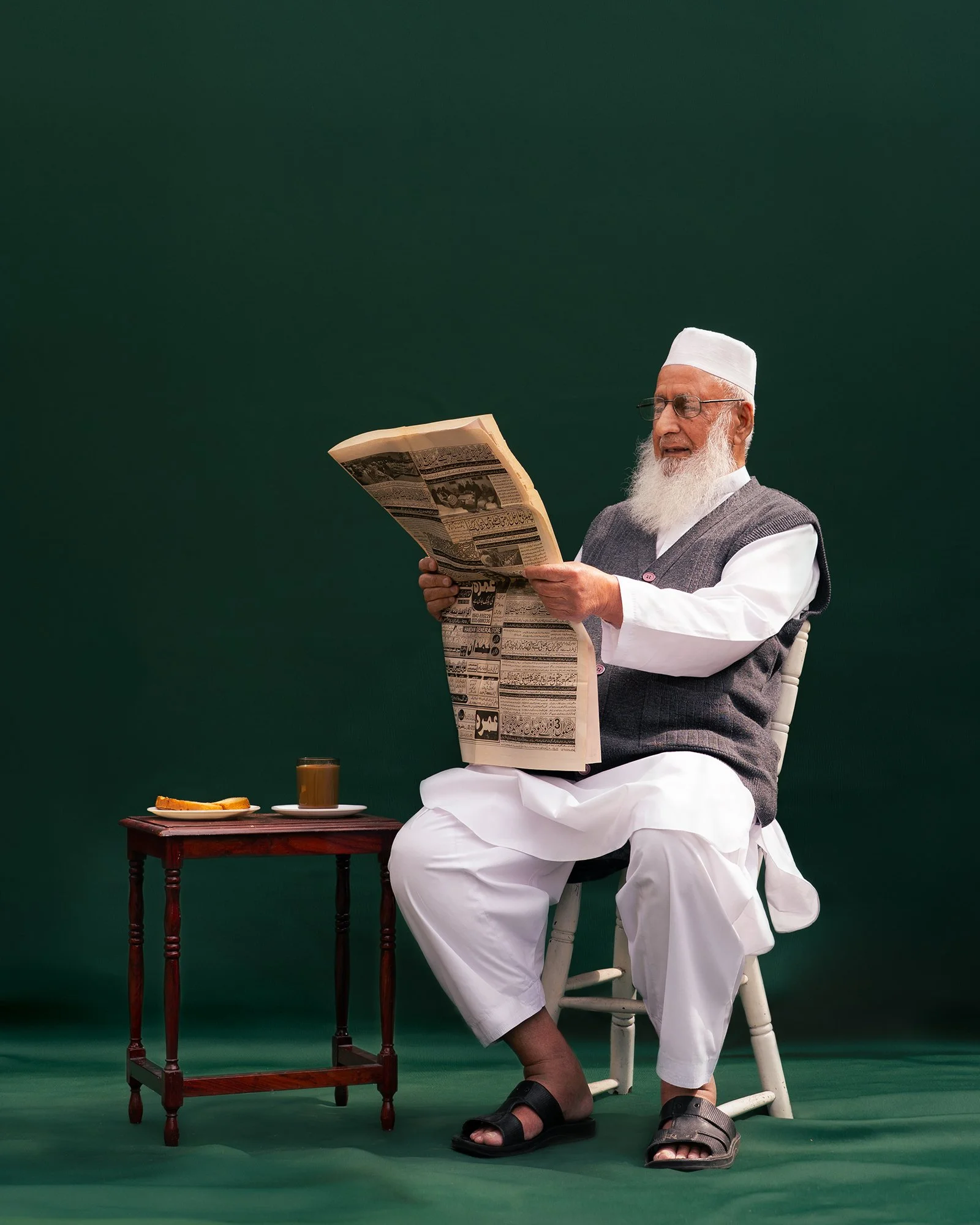
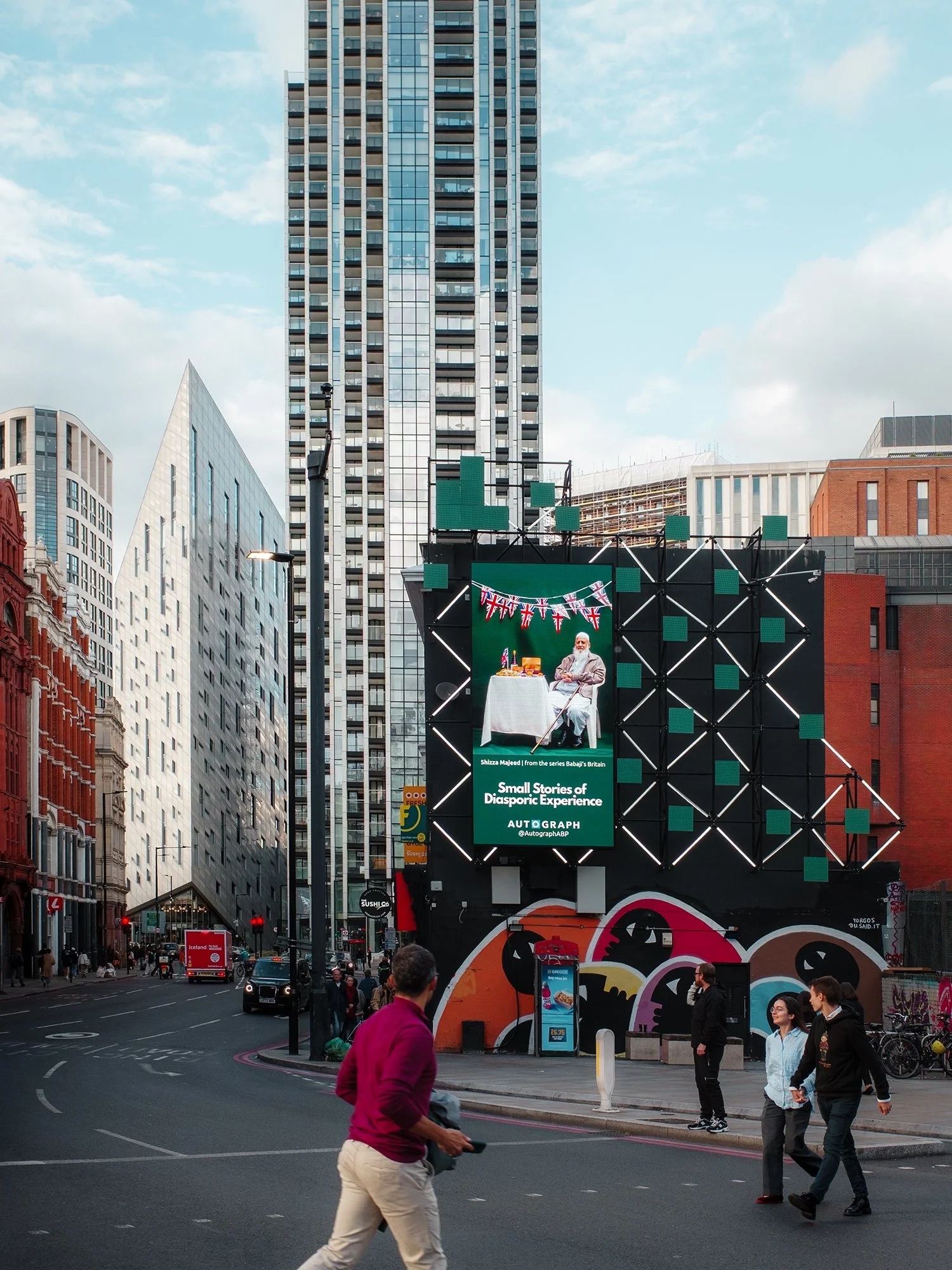
Five O'Clock Tea
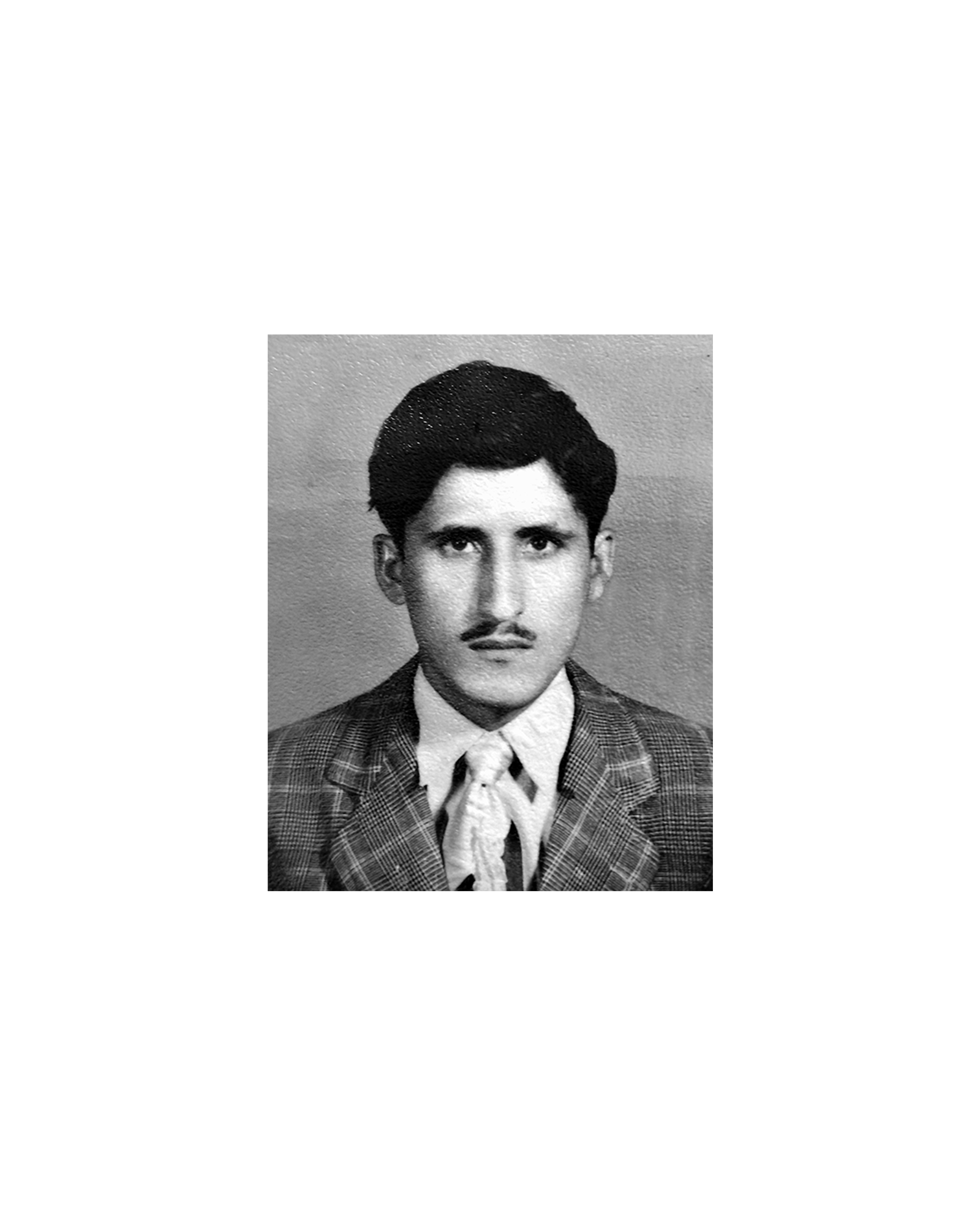
Ghulam Abbas, 1963
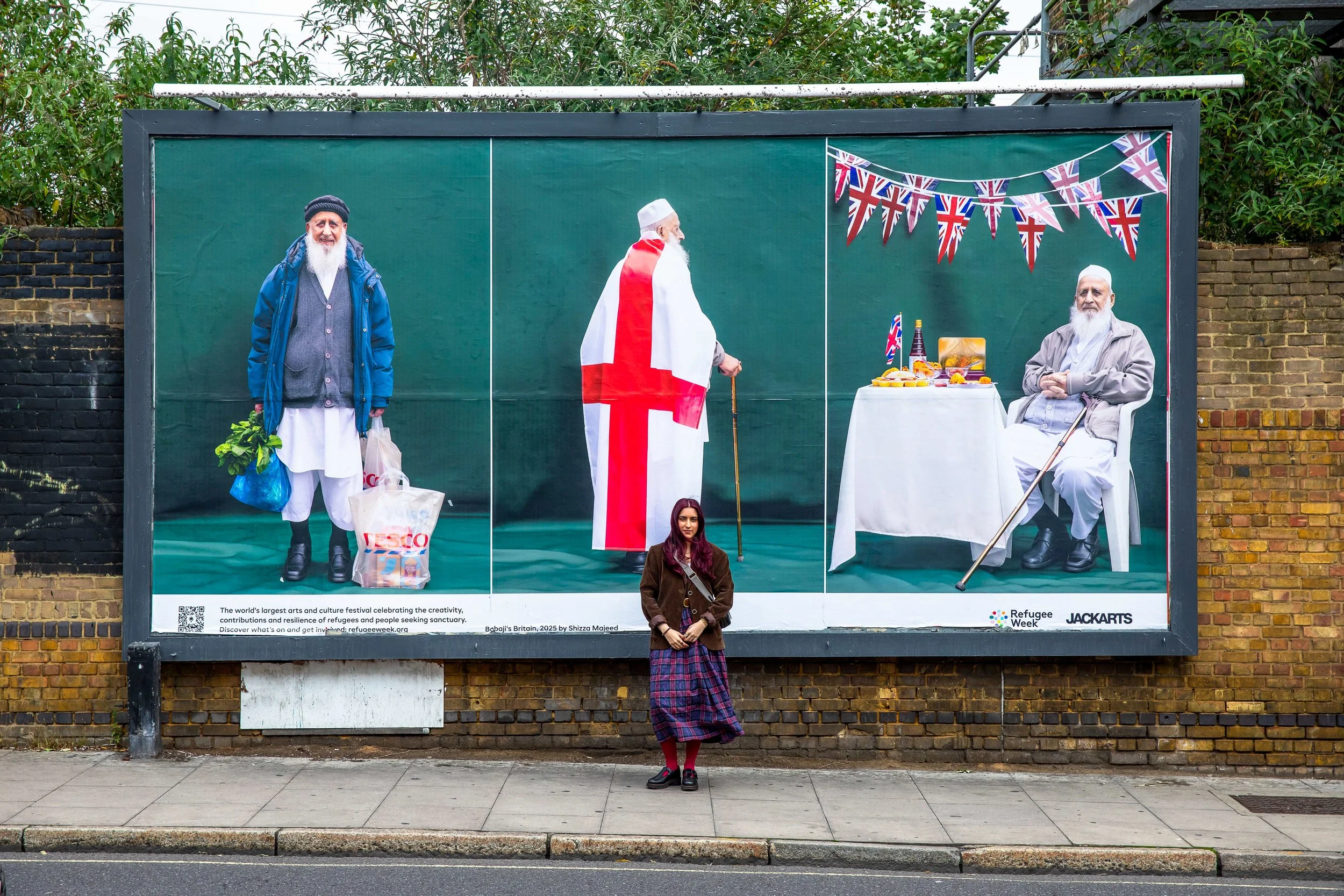
Babaji’s Britain [2025]
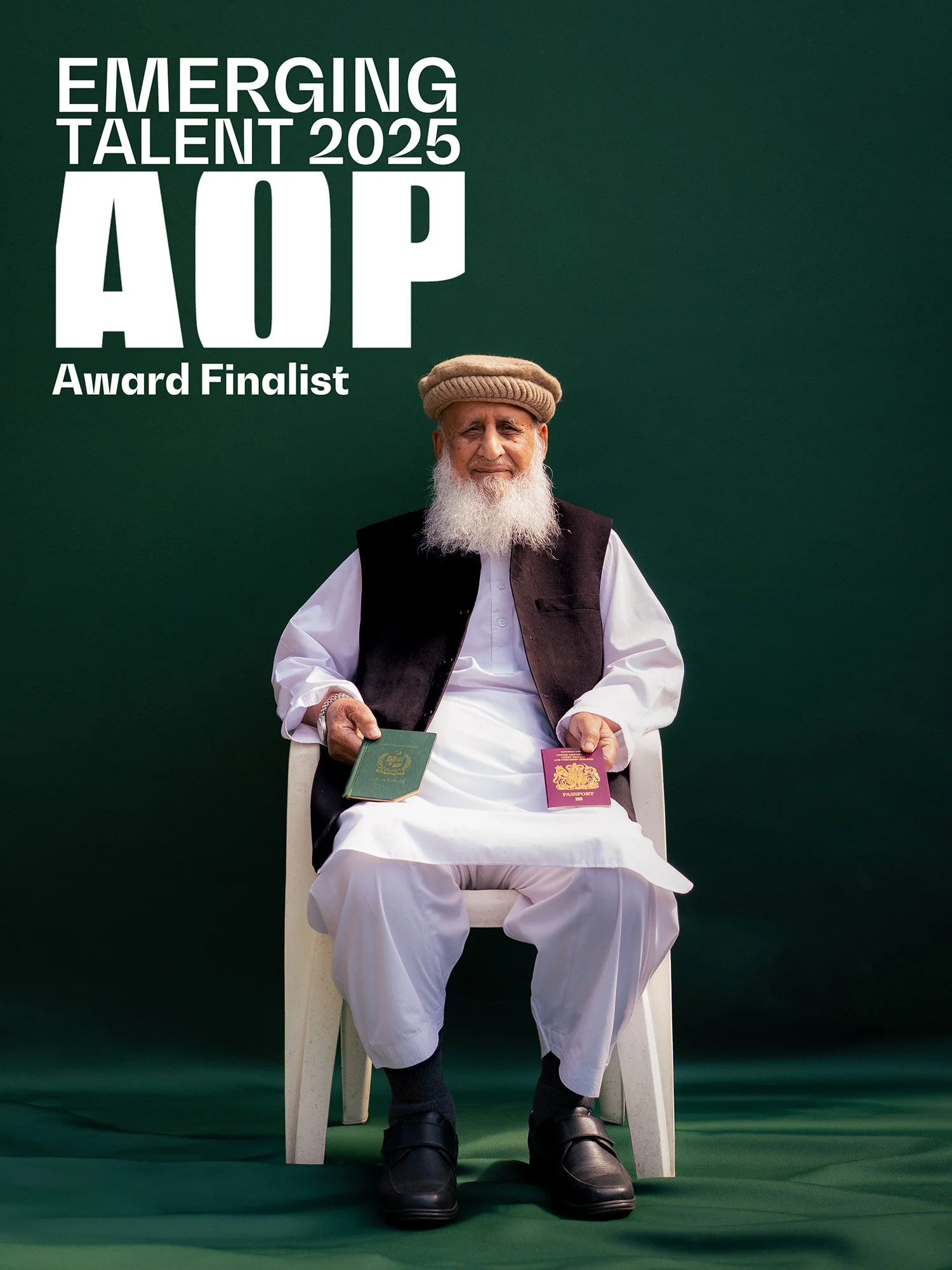
‘Babaji’s Britain’ centres on my grandfather, Ghulam Abbas, a Pakistani man who migrated to Britain in the early 1960s. Now in his late 80’s, he carries an identity shaped by both Pakistani and British cultures. Through a series of portraits created in collaboration with him, we explore how over half a century of life in Britain has shaped his sense of self and what his identity looks like today. From stereotypes to lived experiences, this work playfully visualises how he has held onto his cultural roots while embracing aspects of British life, from sports and food to new traditions and old values.
When my grandfather first arrived in Britain, his plan was to work, save, and eventually return home. Over 60 years later, his life and the place he calls home are firmly rooted in East London. He has navigated decades of change, from learning a new language, adjusting his appearance, and adapting to a new culture, yet he has never let go of where he came from. However, his experience is not unique, but part of a wider story shared by many who, like my grandfather, have helped shape the multicultural fabric of modern Britain.
As a second-generation immigrant, I’ve always been drawn to the complexities of identity and migration. My grandfather’s journey reflects themes I recognise in my own experience: feeling caught between two worlds, too Western in some spaces, not Western enough in others. In those moments, I turn to my Babaji. This project explores that duality, showing that it is possible to belong to two places at once. His story reflects the adaptability that defines the immigrant journey and the inevitable evolving nature of identity when straddling two cultures. In a climate where the meaning of ‘Britishness’ is constantly questioned, these portraits reclaim space. They affirm his belonging and honour the richness of his hybrid identity.
Ultimately, this project is about more than one man. It’s about the resilience of migrants who carry their histories with them, who adapt without forgetting, and who quietly shape the story of a nation simply by being here.
“ The portraits are made all the more powerful by the humour and subtle subversion of nationalist symbols like the St George’s flag. By reclaiming such iconic imagery, the work cleverly challenges contemporary stereotypes in the UK, and uses a gentle humour to communicate a personal narrative of belonging. ”
- Siân Addicott (Director of Ffotogallery Wales)